Quick answer
This illustrative story follows an electrician whose business is only 14 months old. He needs more than his short trading history would support unsecured, so he looks at a second mortgage over his home, behind his existing home loan. He works out his equity, costs the growth plan, tests repayments, talks it through with his partner, and reads the security documents carefully. Names and figures are illustrative.
Key points
- Illustrative only: no real business, person or offer.
- Short trading history made unsecured borrowing harder for the full amount.
- Home equity and a second mortgage made a larger amount possible.
- Joint owners, a clear repayment plan and careful reading were essential.
- Loan type
- Second mortgage (property-secured)
- Purpose
- Van, tools, first employee
- Trading history
- 14 months
This is an illustrative story. The electrician, his family and all figures are invented to show how a property-secured first loan comes together. It isn’t a real customer, a testimonial or an offer.
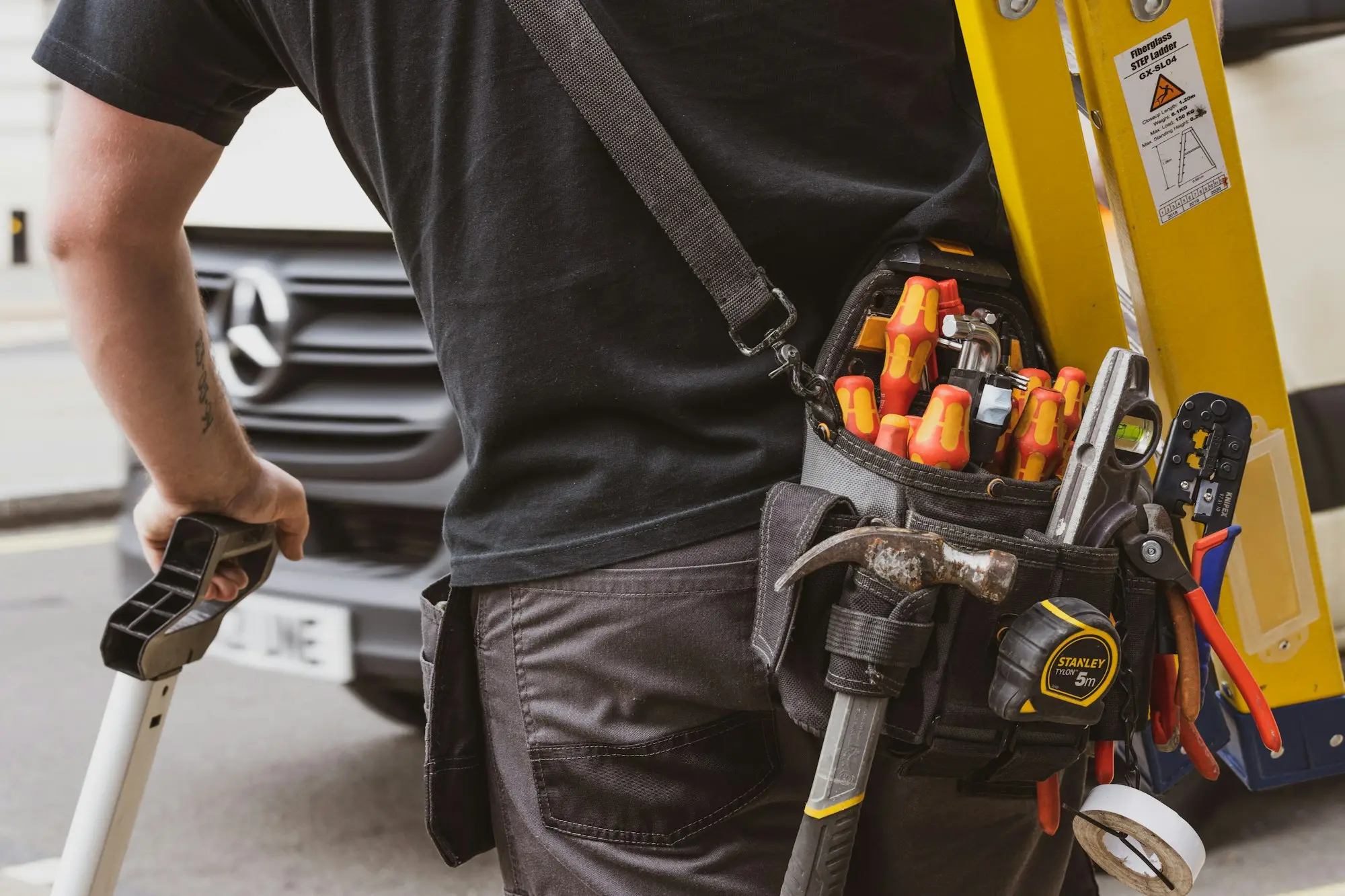
Some first loans are small and simple. Others are a bigger step. This story follows Daniel, an electrician who went out on his own just over a year ago and now has more work than one person can handle.
What was Daniel’s situation?
After eleven years working for a larger electrical contractor, Daniel set up his own business as a sole trader. Fourteen months in, things were going well:
- steady work from builders and homeowners
- all income banked into a separate business account
- BAS lodged on time every quarter
- a waiting list of jobs he couldn’t get to
His purpose, in two sentences:
“I want to buy a second van, fit it out with tools and hire a qualified electrician so we can take on the jobs I’m turning away. I’ll cover wages and super from the extra work, with a buffer for the first few months while the new person gets up to speed.”
How much did the plan cost?
| Item | Amount |
|---|---|
| Second-hand van | $38,000 |
| Van racking and fit-out | $7,500 |
| Tools and test equipment | $14,000 |
| Wages buffer (first three months of the new hire) | $36,000 |
| Signage, uniforms, extra insurance | $4,500 |
| Total | $100,000 |
All figures illustrative.
Daniel’s accountant reminded him that hiring brings new obligations, including super. From 1 July 2026, under Payday Super, the Fair Work Ombudsman explains employers must pay super at the same time as wages, so it reaches the employee’s fund within 7 business days. He built that into his cash flow plan.
Why wasn’t an unsecured loan the whole answer?
Daniel’s trading was steady, but 14 months is a short track record, and $100,000 was a lot to ask on bank statements alone. Unsecured options are sized on turnover and bank statements, and with little history a lender might offer only part of what he needed. (Lessons: how long you’ve traded and new business loans.)
Daniel and his partner, Chloe, own their home jointly. It’s worth around $780,000, with about $430,000 left on the home loan. That’s roughly $350,000 of equity. A lender wouldn’t lend against all of it, but there was clearly room for a business loan secured by a second mortgage, sitting behind their existing home loan. (Lesson: borrowing against property.)
How did they decide whether to use the house?
This was the most important conversation, and it happened at the kitchen table, not with a lender. Daniel and Chloe talked through:
- What if the new hire didn’t work out? Daniel’s waiting list was long enough to keep two electricians busy for months. They also kept the wages buffer.
- What if work slowed? They tested repayments against Daniel’s slowest month (January, when builders were on holidays).
- Could the household cope? They made sure their home loan and living costs were covered even in a lean patch.
- Independent advice. Chloe, as co-owner, spoke to a solicitor about what she’d be signing.
Only once both were comfortable did Daniel make an enquiry. If you’re at the same point, you can start yours here: one minute, no credit check.
What were the steps from there?
In the story, the steps looked like this:
- A call to talk through the business, the plan and the property.
- Documents: ID for both owners, business statements, BAS, and the latest home loan statement and rates notice.
- Property check: a valuation and a title search showing the existing home loan.
- The offer: amount, term, repayments, fees, and the security documents for the second mortgage.
- Reading and signing: both Daniel and Chloe read the documents; Daniel asked what would happen if he wanted to refinance later.
- Settlement: the second mortgage was registered and the funds were paid out.
What can a first-timer learn from Daniel’s story?
- Property can bridge a short history, but it’s a serious commitment.
- Everyone on the title is part of the decision. Joint owners must agree and understand it.
- Budget for the whole plan, including wages, super and a settling-in buffer.
- Test against the slowest month. For Daniel, that was January.
- Have a clear way out. Daniel planned to consider refinancing once the business had a longer track record.
For a plan like this, a simple cash flow forecast is a big help.
What if Daniel’s situation had been different?
- If Daniel had three years of trading, an unsecured loan might have covered the van and tools, leaving the house out of it entirely.
- If Chloe hadn’t been comfortable using the house, they could have staged the plan: tools and a used van first, then the hire once cash flow allowed.
- If the waiting list had been short, hiring would have been a bigger gamble, and borrowing for wages ahead of confirmed work would have deserved much more caution.
Could property help your first loan?
If your business is young but your plans are solid and you own property, a property-secured loan might open the door, as long as you go in with your eyes open.
Our enquiry takes about a minute. There’s no credit check to ask, and we don’t parcel your details out to lender after lender. A real person talks through your business, your property and your plan, and explains what each option would ask of you in plain English. Please be accurate about the property’s value, what’s owed and who’s on the title; it makes the conversation much more useful.
Frequently asked questions
Is this a real customer story?
No. It's an illustrative story showing how a property-secured first business loan can work. The people and figures are invented.
Can you get a business loan secured by your home with a short trading history?
It can be possible, because the property provides the lender's safety net. The lender still needs a genuine business purpose and a believable repayment plan. Property-secured business loans range from $20,000 to $5,000,000.
Does a second mortgage change my home loan?
No. Your existing home loan stays as it is. The business loan sits behind it on the title, using the spare equity.
What if my partner co-owns the house?
They'll need to agree and sign the security documents. They should understand exactly what they're signing and get independent advice.